

Peculiarities of Guatemalan Natural Processed Coffee
Natural processed coffee originated in Ethiopia in areas with limited access to clean water, and is the oldest processing method of all. Nowadays, coffee producing countries like Indonesia, Vietnam, Kenya, Guatemala, Honduras, and more, continue to produce natural processed coffee for its growing popularity and distinct, intense flavor.

In the coffee consumption side of the supply chain, there's a big misconception about what natural process and organic coffees are. In a nutshell, when we talk about natural processed coffee, we talk about the method that was created to process the coffee fruits after they have been harvested using minimal water. Organic coffees are the ones where the coffee trees and surrounding natural environment have been taken care of and nourished without the use of chemicals.
What is Natural Processed Coffee?
Going more in-depth about what this process is all about, the natural processing coffee method begins after the fully ripe coffee fruits have been harvested. In Guatemala the harvest is done by hand, without the use of machines. After the harvest, coffee cherries are immediately put to dry on drying patios or raised beds under the sun for about two weeks. The result of drying the entire fruit with all of its layers and sugars on is an intense earthy and fruity flavor.
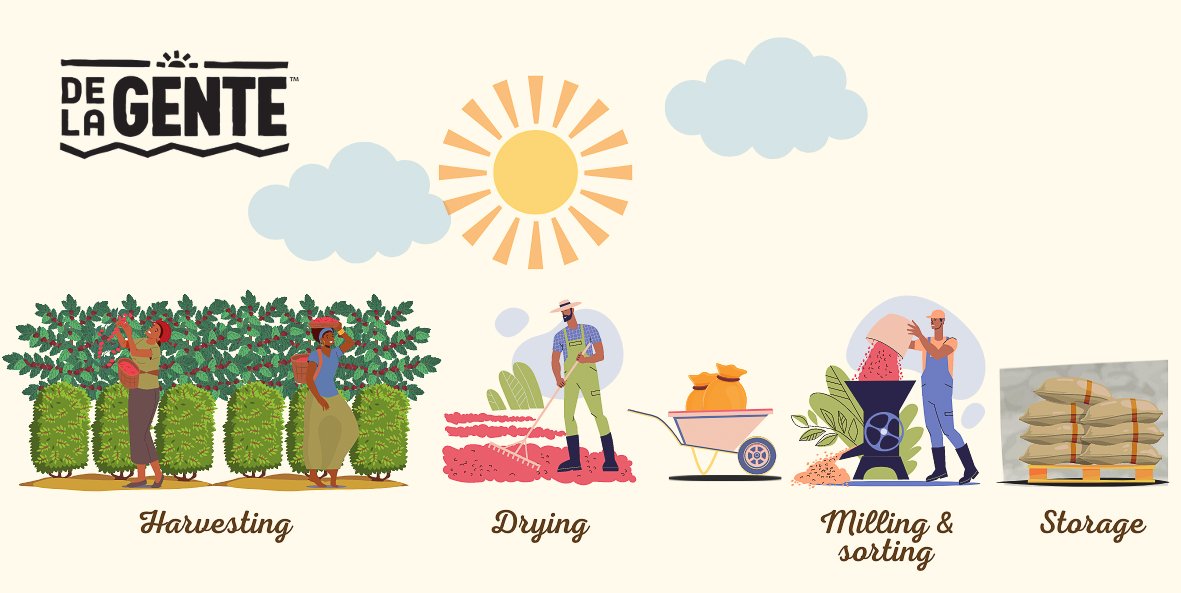
Natural Processed Coffee in Guatemala
We spoke to Manuel Gómez, a coffee producer from our partner cooperative, The Coffee Growers of San Miguel Escobar in the Antigua growing region, about the special care and good practices when he processes his natural coffee micro-lot:
What are the special steps you take during the natural process of coffee?
First, I have to harvest only the right coffee cherries so that later, during the drying period, I get better results. By that, I mean that I [harvest perfectly ripe cherries]. I don’t let the coffee cherries over-ferment on the branches [and avoid] harvesting the ones that are not fully ripe.
That doesn’t mean I don’t pay attention to the drying stage. Unlike the washed process, the natural process needs to be moved twice as much [daily]. For example, in the washed process, my family and I move it four or five times a day. In the natural process, we move it ten times a day from 11 am to 3 pm, that is when the sun is strongest. That helps the coffee to dry more evenly because if you don’t move it, you’ll get over fermentation and funguses that result in a bad taste.

Ripe coffee cherries. Photo courtesy of Manuel Gómez

Manuel Gómez annd Family. Photo courtesy of On The Way Travels
Why is it important for coffee be dried to its optimum state?
Letting the coffee cherries dry with all their natural sugars and moving them constantly, allows them to have the distinct fruity flavors [associated with] the natural processed coffees, and the beans get a more even color.
For how long do you leave the coffee to dry in the natural process?
The number of days I let my coffee dry depends on the amount [of coffee I have]. For 1,500 pounds of coffee cherries, I use 30 square meters (≥ 323 square feet) of space to lay them out. Those coffee cherries take 20 to 22 days to dry depending on the sun and the clouds.
What is the difference between drying the coffee on drying patios and using raised beds?
There's a big difference in the outcome if people don’t take adequate care when using drying patios. By that, I mean that if you dry your coffee on patios that haven’t been thoroughly cleaned beforehand, your coffee will absorb dust and, in our case being so close to an active volcano, ashes too. In the end, your coffee will have cardboard-like, earthy, or moldy flavors. Another difference is that when using drying patios, the coffee may dry faster because there's no air circulation and the concrete [holds more heat].
When using drying raised beds, there's more air circulation. Also, when you move it, all of the dust, little branches, and all of that organic material that comes with the coffee falls off [through the nets].

Drying raised beds

Drying patios
In the southwest of Guatemala, in the Atitlán coffee growing region, another one of our partner cooperatives, Ija’tz Cooperative, produces a blend [harvested by 35 producers] of natural processed coffee. This cooperative was established in 1995 with the goal of reclaiming and protecting the land and the surrounding environment while revitalizing traditional agriculture processes. Since its founding, Ija’tz Cooperative has incorporated cultivating arabica coffee, grown under the shade of native plants and trees, which aids in carrying out their commitment to environmental preservation and providing economic stability to its 35 cooperative members.
They began processing natural coffee lots in 2018, exporting only two sacks each containing 150 pounds of coffee, with De La Gente. In 2024, they increased the amount and successfully exported 15 sacks. Their values align with the idea of using small amounts of water to produce coffee, and they are doing a fantastic job with their natural processed coffee. Tristan Lefever, specialty coffee roaster and friend of DLG says:
“Natural Guatemalan [coffees] are just not common, especially at that time [year 2018] but even now are harder to come by. In 2018 we had never seen one […]
Washed Guatemalan [coffees] are typically very chocolatey, and a lot of roasters use them for espresso or medium blends; for example, we might look for a washed Guatemalan to blend with an Ethiopian natural because you get the fruity Ethiopian notes with big rich chocolate of the washed Guatemala, and that is a great balance. But, the Ija’tz natural had both — cherry liquor, light, nut-like pistachio and hazelnut, and then this big chocolate base.”

From left to right: Amori, Tristan, Arnulfo, Roberto and Josías, Ija’tz cooperative members.
Order samples