Supporting More Than Coffee | How Coffee is Supporting Education and Community Growth in Guatemala
By Aliisa Oake
More than coffee, this crop is a livelihood for communities in Guatemala. The role that education plays in our lives can not be overstated, but it’s not as accessible as it should be in some countries — making it difficult for communities to reach their full potential. Limited resources, geographic barriers, and economic pressures often make attending school a challenge. In Guatemala, about 44% of the population lives in rural areas, which means that many schools lack basic infrastructure, teachers, and resources — leading to extended cycles of poverty and inequality levels. With coffee being a primary source of income for many families in Guatemala, they rely on their yearly harvest to support their households and the stability of their future. Due to financial restrictions in these communities, many families often can’t afford the costs of higher education and need their children to work on family farms after completing schooling for basic levels of education.
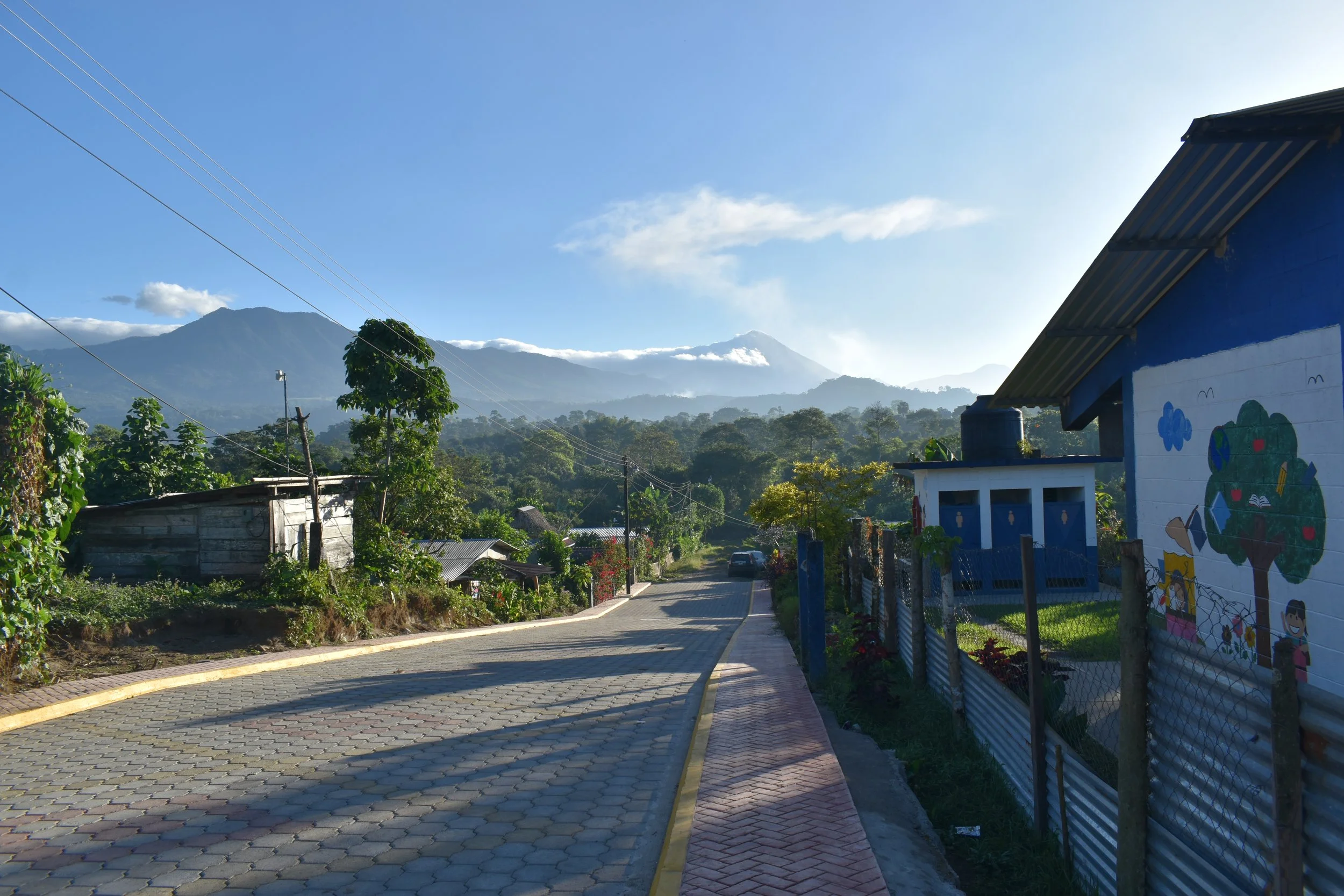
Town of Colomba in San Marcos region of Guatemala, where Santa Anita Cooperative is located
This International Day of Education highlights a hard truth — not every family can afford to send their children to school. At De La Gente, our work has created a change as we establish more opportunities for small-scale coffee producers in Guatemala. In relation to supporting education, we have been able to create opportunities for young coffee growers to further their knowledge of coffee production or pursue a different career path. Additionally, we encourage meaningful knowledge exchange between community members of our partner cooperatives and with people from around the world through our Tourism and Immersion Programs, especially with our Educational Trips. We have acknowledged that coffee carries value for communities that are worth more than coffee, and holds the hope for a future involving community growth and expanded opportunities for the next generation. We’ve seen how access to education can transform lives in Guatemala’s coffee-growing communities by creating pathways towards community growth, lifelong learning, and economic resilience.
How Supporting Education is Changing Guatemala’s Coffee-Growing Communities
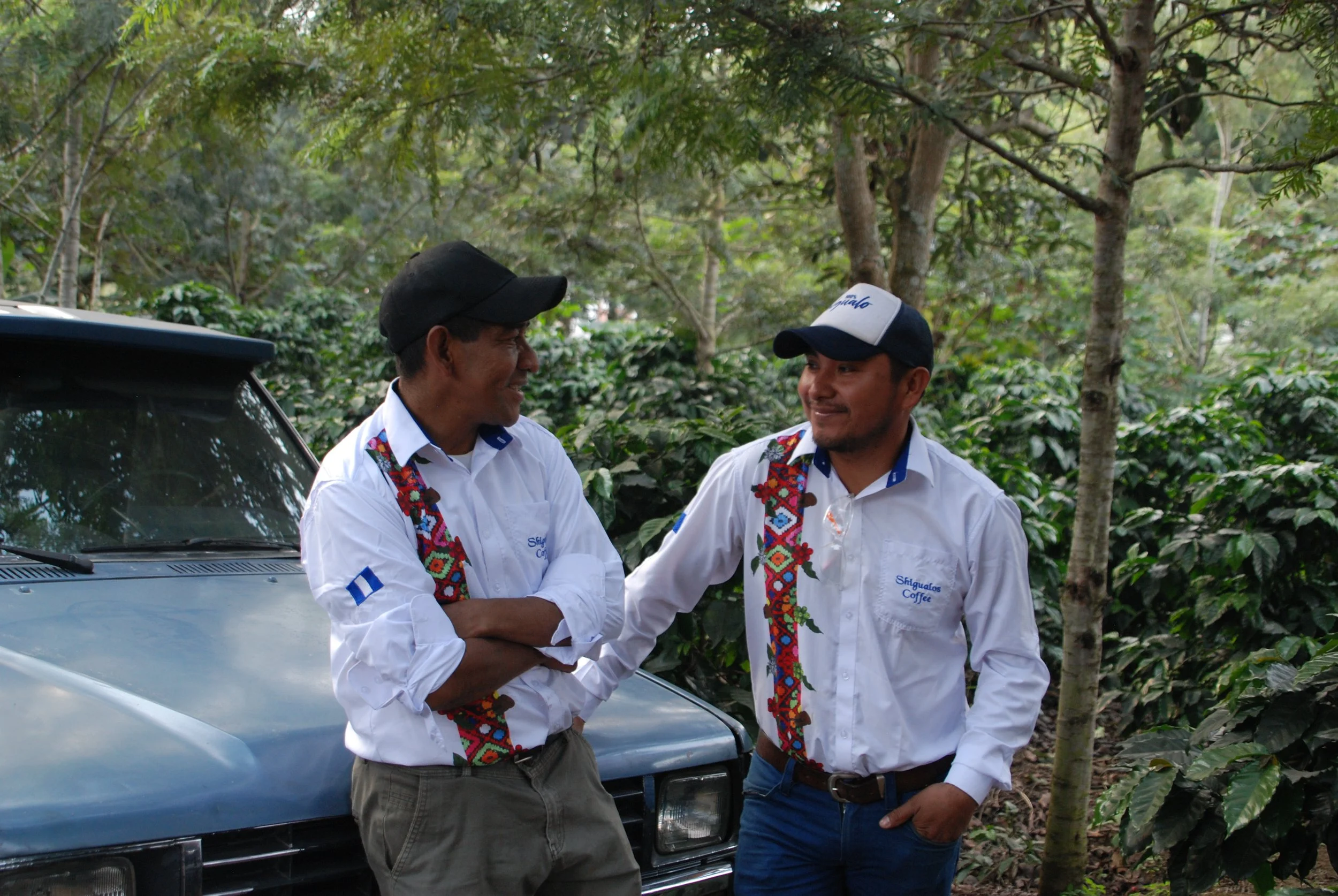
Coffee producers from Shigualos Cooperative talking in coffee fields from the Antigua producing region
Coffee growing communities in Guatemala are filled with abundant fields of lush green coffee trees, diverse plants, and wildlife that thrive along the slopes of volcanoes. But within these high altitude regions are also homes filled with memories, welcoming families, and children who grow up alongside the steady rhythms of coffee harvest.
For coffee growing communities, each harvest becomes more than coffee. With coffee as their primary sources of income, earnings are turned into food for families, provide resources for maintaining homes, and when possible, serve as an opportunity to send children to school. Unfortunately, one of the hidden struggles of coffee producers involves further supporting education for their children — limiting the potential for community growth in coffee growing communities in Guatemala.
Young generations in Guatemala’s coffee growing regions hold the potential for the future of their communities, especially if they decide to remain in coffee production. To support both personal advancement and community growth, it’s essential for children to have access to quality education at a young age and engage in practical teachings as they grow, which helps them develop foundational life skills. Early education helps broaden economic possibilities beyond reliance on coffee farming alone — empowering individuals to pursue innovation, entrepreneurship, and new opportunities within their communities. Through transparent coffee purchases and knowing where income is going, you as a consumer are also supporting education and directly investing in community growth as funds help support educational opportunities that empower youth and strengthen economies.
Coffee production, paired with access to consistent markets, has provided coffee producers more opportunities over time as they and their families are more fairly compensated and recognized for their work. To get more insights on this, we talked to Estela González — a young coffee producer, daughter of Freddy González, and member of La Familia Collective, one of our partner cooperatives located in the town of San Miguel Escobar, in the Antigua coffee growing region of Guatemala. Estela shared that she’s seen an evolution in her community. As more people have been able to access education, the more community growth they have seen. These opportunities have allowed her family to experience the true value of their work, showing how coffee production can support lasting community growth, more than coffee has been able to achieve in the past.
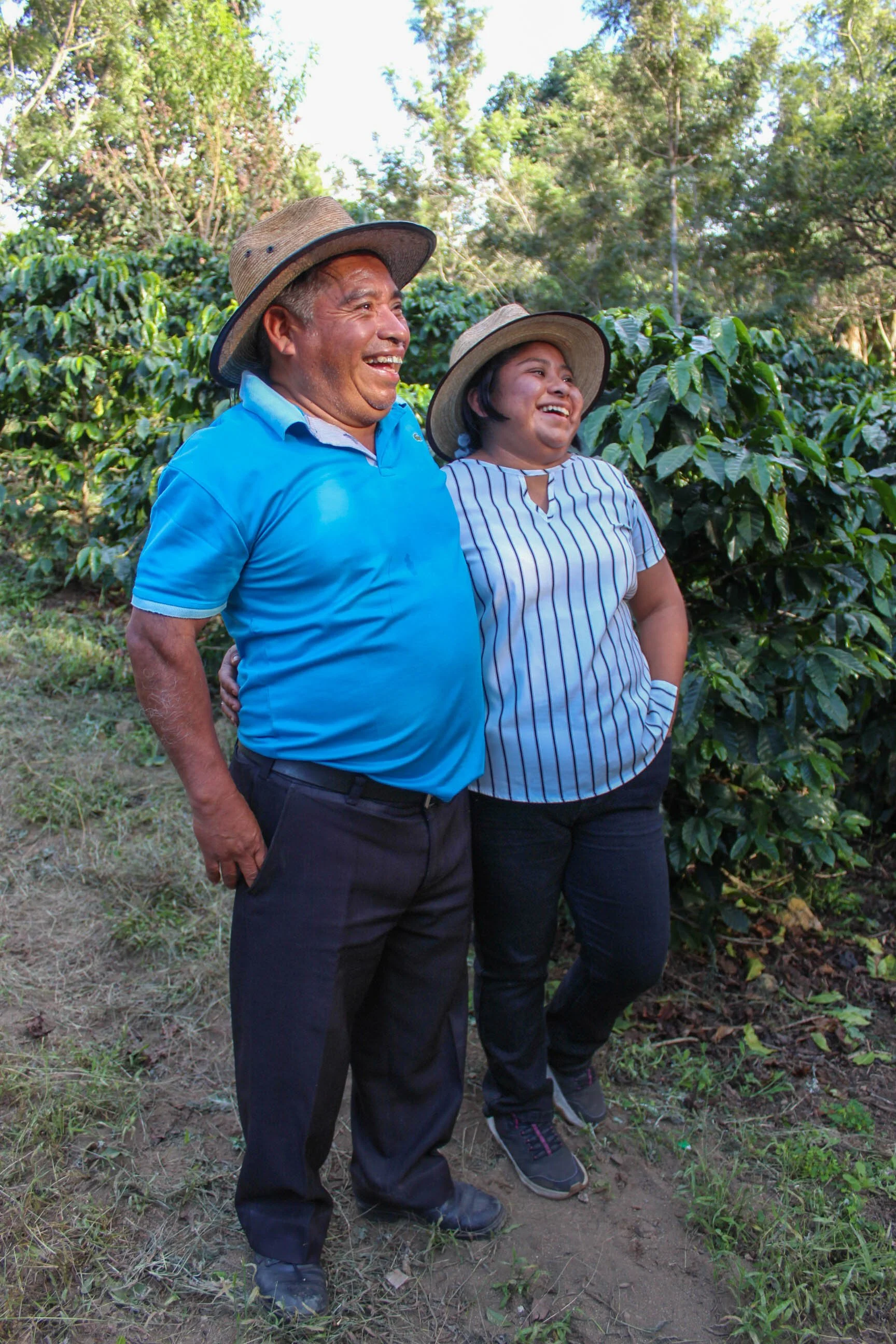
Estela González and her father, Freddy, from La Familia Collective within fields of coffee trees
“[We’ve seen] a very positive change in education. My family is a clear example. When we weren’t producing coffee, access to education was quite limited for us. My older siblings, who are now 35 years old, only received a 6th grade education. They finished school at age 12, and that was all the education they received.
Now, we, the third generation, have access to better education. We finished elementary school, completed middle school, started a career, earned a high school diploma, learned English, received training in coffee production, and learned about various farming techniques.
And the fourth generation has a better opportunity; several of our nieces and nephews want to be doctors, engineers, and lawyers, and they will use profits from coffee farming to pay for their studies at university. We’re seeing a big change. Before, our education only went up to the sixth grade or primary education, but now we can see that our education level has risen to university [level].”
Providing Fair Knowledge Exchange — Opportunities For Women’s Education
Another barrier involving accessing education in Guatemala is the lack of fair knowledge exchange for women and girls in many communities, especially in rural areas. Besides many agriculturally-focused communities dealing with poverty, they also tend to have more traditional gender roles. Girls and young women are expected to take on domestic duties like cooking and caring for younger siblings , which directly impacts the time needed for schooling. Having to fulfill these roles may also impact the way they view education, as it’s not seen as a valuable asset for them. This leads to lower school enrollment, higher dropout rates, and fewer years of education compared to boys — reducing literacy rates, professional development, and community growth.
During our conversation with Estela, she stated that one of the largest changes that she has seen in her community in San Miguel Escobar was the empowerment of women, which was an opportunity generated by coffee.
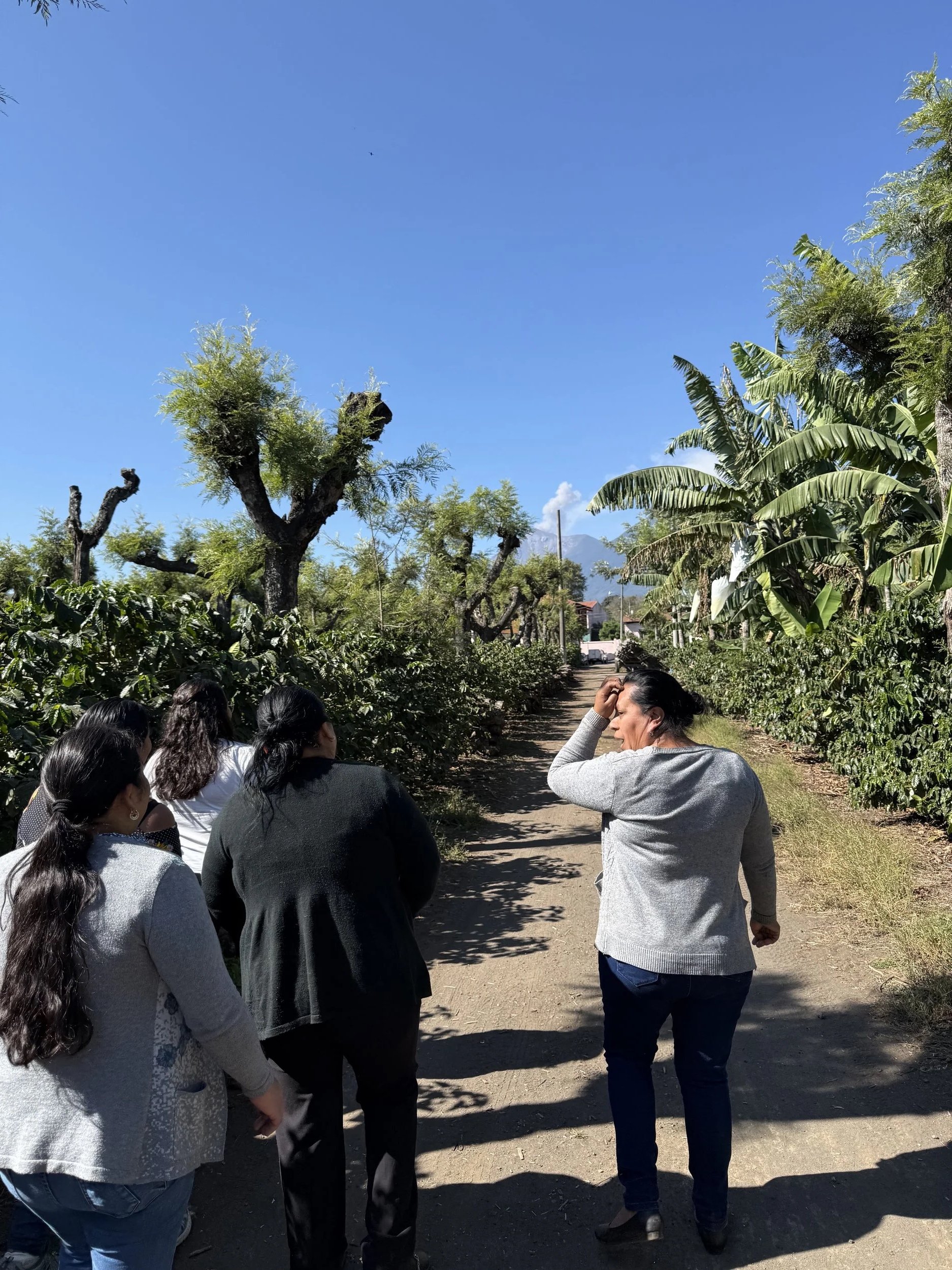
Members of the Women Caficultora Network walking through coffee fields during coffee cultivation training
“Looking back several years, the first change I can see is in the empowerment of women, since previously women weren’t involved in business, and sexism was quite prevalent.
Coffee came not only to change our lives, but also to change our mindset, because if we look closely, a large percentage of the work involved in processing coffee is done by women. Now, these women have dignified jobs, they value themselves, and they are starting to create new businesses, including those related to coffee and cosmetics, opening new shops, learning new languages, and training in areas like food and textiles — whatever interests them.”
At De La Gente, we have seen some changes in women’s roles in Guatemala’s coffee growing communities that we work with. Being involved in coffee cultivation and accessing fair markets has provided women with more valuable knowledge exchange and recognition for their expertise in coffee farming. This has resulted in women taking on greater responsibilities in both the fields and in their communities as they gain confidence in their skills and leadership — creating positive economic impacts, but also inspiring more women and girls to view education as a desirable pathway towards opportunity, empowerment, and personal growth, and to develop the skills needed to be leaders in agriculture, business, and community development.
Knowledge Exchange During Educational Trips — Furthering Community Growth
Education isn’t limited to the pursuit of a degree. It also includes experiential learning gained on an international level when students participate in immersive learning as they interact with diverse cultures and become exposed to new perspectives. As we continue supporting education in other areas of our work, we have been excited to welcome more and more students as they go beyond their classrooms and participate in our Educational Trips. Meaningful knowledge exchange during our Educational Trips is facilitated through a guided travel opportunity — transforming classroom learning into concrete experiences in Guatemala. As students visit the coffee growing communities of some of our partner cooperatives and learn about Guatemala’s history, culture, and agricultural practices, they gain hands-on learning experiences that deepen their understanding of global supply chains and foster cross-cultural understanding.
Through our Educational Trips, knowledge exchange is fostered through meaningful conversation and inspires community growth and development — encouraging young people to become active participants in promoting social, economic, and environmental resilience. When students are welcomed into Guatemala’s coffee growing communities and experience aspects involved in a coffee producer’s daily life, they learn about the economic challenges that they typically face and come to realize that a coffee producer’s life depends on much more than coffee, but also transparent recognition for their hard work and having access to more resources. The knowledge exchange between coffee producers, community members, faculty, and students fosters a deeper understanding of the importance of building connections that strengthen communities over time — creating learning opportunities that benefit both students and local residents.
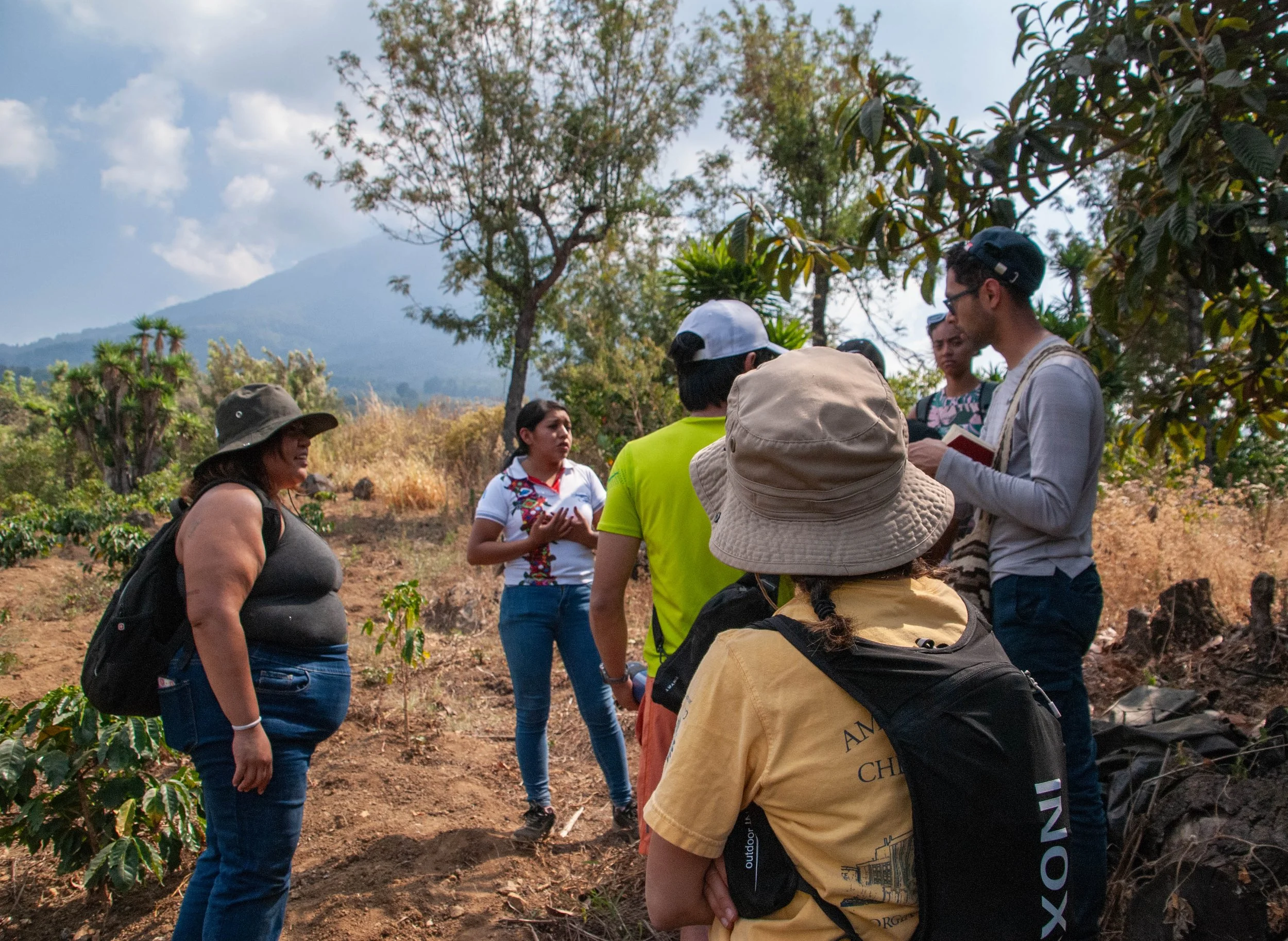
Educational Trip participants from Emory University learning from a coffee producer and member of Shigualos Cooperative
Educational Trips contribute directly to community growth as they strengthen local communities in Guatemala and around the world. Through open and genuine conversation, connections spark future endeavors — encouraging continuous learning and ideas for community members to develop new skills such as leadership, communication, and innovation. Additionally, one of our hopes in our Educational Trips is for participants to return from their trip knowing that by being more aware of what’s involved in the coffee industry and global supply chains, they pay more attention to their purchasing habits. There are meaningful, community-wide benefits which derive from coffee production — reinforcing that producers’ hard work represents more than coffee as it generates positive social and economic outcomes.
Supporting Guatemala’s Community Members Through More Than Coffee
At De La Gente, roasted coffee holds stories of resilience, hard work, and opportunity that represent much more than coffee itself. Each bag of roasted coffee that we sell carries opportunities for coffee producers and their families as they receive more income and access resources that support community growth, such as supporting education for their children.
The future of coffee growing communities is shaped by each harvest. Through our partnership with small scale coffee producers in Guatemala and their established cooperatives, we make sure that they are always provided with fair and stable income, where coffee becomes a vehicle for education, opportunity, and empowerment within communities. When producers receive fair compensation, they can securely re-invest in their communities and secure a brighter future for their children through education. More than coffee being a source of income, it carries hope for the next generation. Whether young generations of coffee producers choose to further invest in coffee cultivation or move away from the fields as they follow a new career path, their livelihoods are supported and community growth is fueled.
When you buy coffee from De La Gente, you’re supporting more than coffee — you’re supporting the creation of a positive change for farming families, children gaining access to education, and communities growing stronger with each harvest. Every purchase or contribution turns into lasting impact — supporting education, community growth, and the long-term resilience of coffee growing communities in Guatemala.
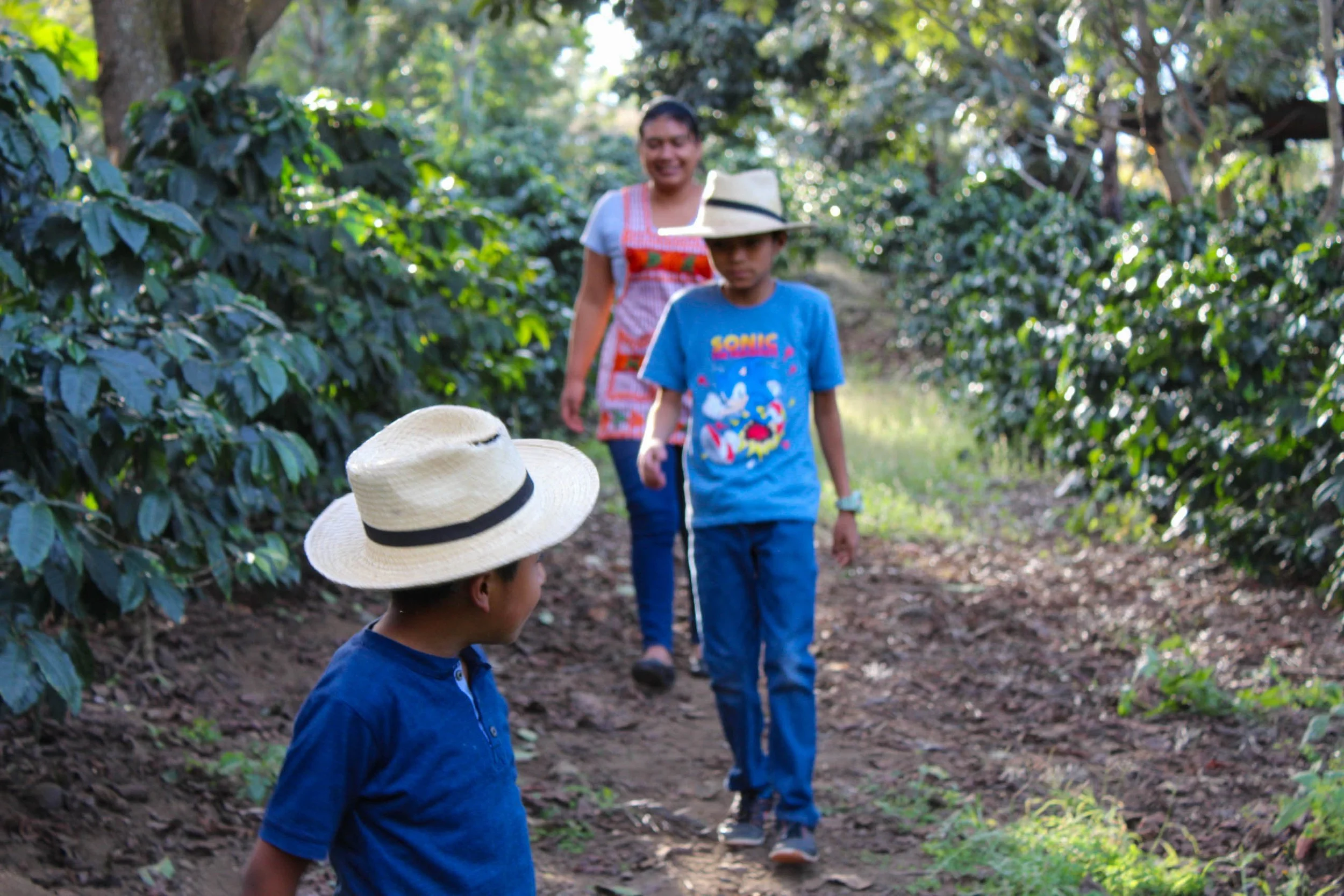
Children of the members of La Familia Collective walking in coffee fields
Watch this video for more insights on what’s involved in our customized Educational Trips!
Visit our YouTube Channel to watch more of our videos and get a behind-the-scenes of coffee production.
