

Diving into the Coffee World: Specialty Coffee Beans Explained
By Aliisa Oake
In a few words, specialty coffee is a type of coffee selected and harvested with greater care and attention. These beans have a superior quality and produce more unique flavors than regular coffee.
In this article, we will explain why specialty coffee beans are so complex and exciting, but also not as complicated as it sounds. We will also explain who and what determines the quality of coffee to be considered specialty coffee.
What Makes Specialty Coffee So Different?
The term “specialty” is determined by a coffee grader, known as a Q-grader, who has a distinguished palate and can skillfully identify the quality of the coffee. By being hand-picked during harvest and carefully roasted, specialty coffee flavors reflect the origin and terroir of the beans and produce unique flavor profiles compared to typical coffee.
Classifying coffee beans as specialty coffee depends on being graded and ranked on a scale from 0 - 100. If a score of 80 - 100 points is achieved, the coffee is considered as specialty coffee. Standards of this system are set by the Specialty Coffee Association (The SCA) and is intended to support quality and consistency across the industry. The coffee grading process is done through cupping, where brewed coffee is tasted depending on flavor notes and specific descriptions to be scored and graded by quality levels, and depending on specific criteria implemented by the SCA. Characteristics of coffee include aroma, flavor, aftertaste, body, acidity, and sweetness.

Specialty coffee ready for cupping
The appearance of raw coffee beans also affects their quality level. Typically, green coffee beans are similar in size, have an oval shape, and dense in weight with a light to medium brown color. They should have an overall smooth surface and shouldn’t be peeling. Any flaws or inconsistencies in appearance will mean that they weren’t harvested and handled with as much care. Defects can also affect the taste of coffee after it’s roasted. Depending on a certain flavor note or aroma in the coffee, Q-graders can detect if the beans have been stored in places with high humidity, areas contain mold, or even if unripe coffee cherries were harvested. By knowing the exact errors, producers can work on removing defects over time to obtain higher scores.

Unroasted, green coffee
Producing and Harvesting Specialty Coffee
Specialty coffee begins with the coffee producer, who has worked towards achieving the best method for growing and processing the highest quality coffee beans. The type of plant species considered to be specialty coffee falls under the Arabica variety, which is known for its superior flavor and aroma. Specialty coffee typically grows in specific regions or single farms with different environmental factors, altering the characteristics of the final product. Factors like the altitude, weather, climate, soil, and farming practices all play a role in developing a special flavor and aroma of coffee beans.
In Guatemala, coffee has been profiled into eight growing regions, which each have a different microclimate, common plant varietal, and growing condition. The volcanic soil, high altitude, and favorable climate contribute to anticipated flavor profiles depending on the region. For farmers producing specialty coffee beans, the highest priority is the quality of the bean, which requires coffee to be free of defects and picked at peak ripeness.
In De La Gente’s work with smallholder coffee farmers, we work with different cooperatives located in four of Guatemala’s coffee growing regions. These small-scale coffee producers work together in correlation with their associated cooperative to produce high-quality specialty coffee. As we’ve connected producers with buyers to sell their carefully selected coffee, the farming communities of these cooperatives have been celebrated and recognized for the high value of quality-grown coffee, which has impacted their economies greatly. Each cooperative member is responsible for their harvest and takes care to maintain high-quality standards through each step of the coffee cultivation process.
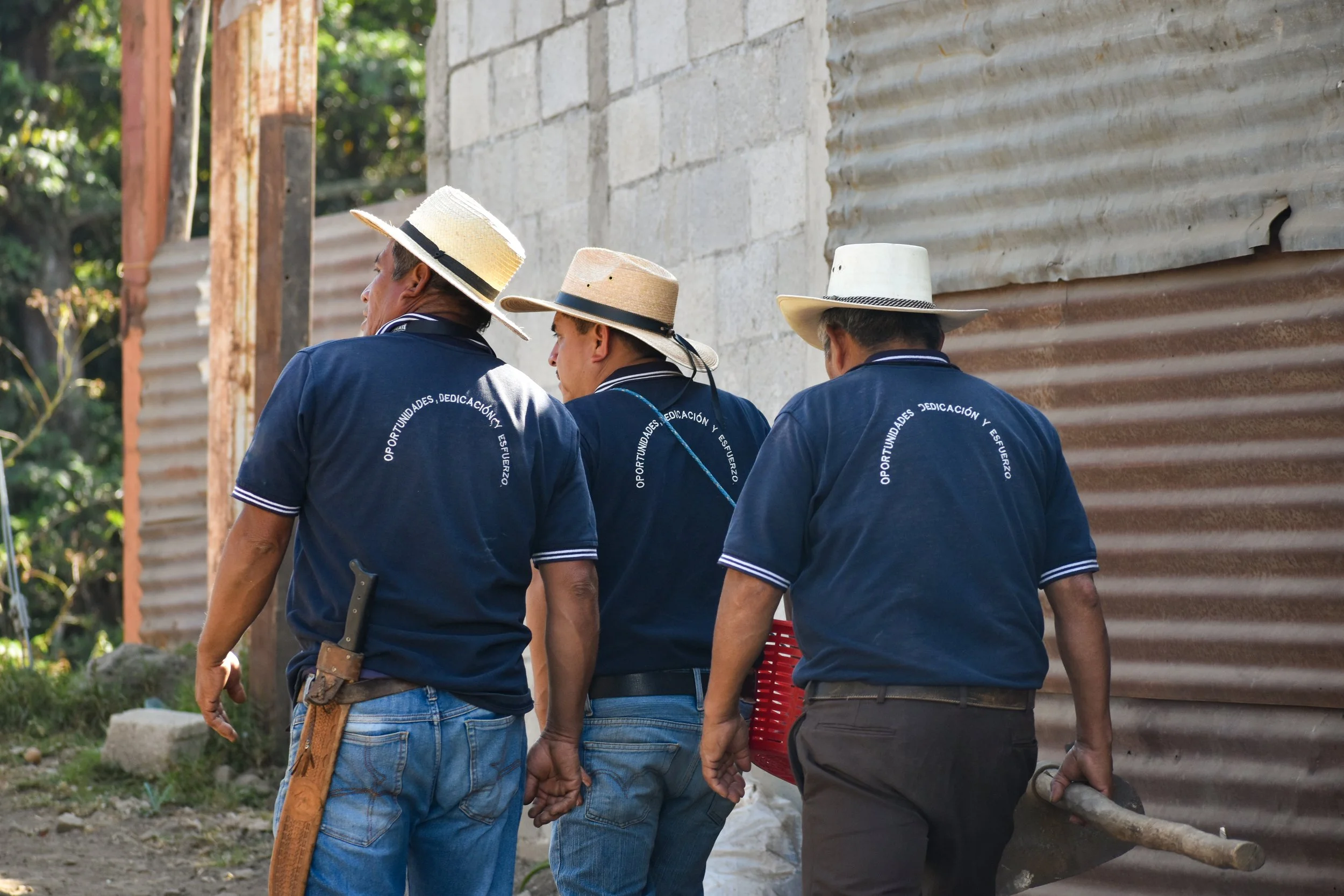
Coffee farmers of Coffee Growers of San Miguel Escobar
It’s important for producers to tend to their farms and work towards achieving optimal growing conditions, especially due to the fact that this assists with enhancing coffee flavors. Elena Diego is a coffee farmer from Apcasa, Santa Anita in the San Marcos region of Guatemala. She told us that her cooperative members spend a lot of time nurturing the land that the coffee trees will be planted on prior to focusing on the other steps. She says that providing shade and removing weeds is crucial to having dense coffee cherries.
At another one of De La Gente’s partner cooperatives in San Miguel Escobar of the Antigua coffee producing region of Guatemala, producers work towards cultivating specialty coffee beans. Being located on the slope of a volcano, the altitude and soil affect the way the coffee tastes. This is because there are more nutrients and minerals in the soil from the volcano that enhance the flavor notes of the coffee. Farmers who work in larger plantations normally pick about 200 lbs of coffee during the eight hours that they spend collecting ripe beans. Small-scale specialty coffee producers take more time to carefully pick the ripest coffee by hand, so they end up picking about 100 lbs at the end of their day during harvest season.
Once the harvesting process begins, picking only the ripest cherries is important to the start of the cycle. Ingrid Hernández, a member of the Coffee Growers of San Miguel Escobar cooperative shared some advice on what to look for when harvesting coffee beans:
“Coffee cherries should be a specific burgundy color when harvested. When they are this color, it indicates that they are ripe and will have the best flavor.”

Ingrid Hernandez
Specialty Coffee Processing, Exporting, and Roasting
Processing specialty coffee is typically more diligent, so the flavors are both preserved and further enhanced depending on the processing method. Coffee processing methods include washed, natural, or honey and promote the development of different flavors.
The most common coffee processing method, the washed processing coffee method, is when the coffee fruit is removed and then left to ferment. After fermenting, beans are washed and laid to dry on patios or raised beds. Washed coffee provides a clean and consistent result, while removing any impurities that would affect the coffee taste. Natural processed coffee involves immediately putting beans on drying beds after they are carefully harvested and are allowed to dry for about two weeks. This results in the entire fruit drying with all of its layers and sugars, producing an intense earthy and fruity flavor. Lastly, honey processed coffee falls between natural processed and washed coffee. In this method, the outer layer of the fruit is removed, but the mucilage layer is still intact when drying.
When specialty coffee is exported, the unroasted, green beans need to be packaged in a specific way before being shipped to the final destination to maintain freshness and quality. The green beans are packaged in hermetic storage bags, which are air-tight bags that prevent oxygen and moisture from reaching the beans. These storage bags are inserted in jute bags, which are made from a natural plant fiber.

An example of what the hermetic storage bags and jute bags look like.
When sourcing specialty coffee, De La Gente works directly with smallholder farmers and cooperatives, bridging the gap between coffee producers and consumers — in this case, coffee roasters.
“We act as importers, but most importantly, we create connections where there is an exchange in which the coffee producers can learn and receive feedback from the consumers. Consumers can learn from the coffee producers about the farming and coffee processing methods” Says Marcela Méndez, Coffee Relationship Coordinator at De La Gente.
De La Gente’s business model is reflected on “relationship-based trade” system, where standards of fair trade practices and related certifications are applied to the business transaction. In this sense, the realities of the coffee producers are taken into account for so ethical sourcing practices are followed.

A step in the process of how coffee is transported from the cooperative member's house to the exporter's headquarters. The exporter will then prepare the coffee in the hermetic and jute bags.
Coffee roasting requires a high level of expertise and is the final stage that creates the superior flavor found in specialty coffee. The coffee roaster must carefully monitor the beans depending on their specialty level profiles which should highlight unique flavor classifications and intensify different bean characteristics.

Green coffee beans ready to be roasted
Professional roasters are very skilled in enhancing coffee flavors and have spent many hours perfecting each roast. Kyle Rohling is a former Head Roaster and Q grader of Coffeebar, Reno. Coffeebar has been purchasing coffee from La Suiza Cooperative in the San Marcos coffee producing region in Guatemala since 2018. He shared a few words about the roasting process with coffee sourced from our partner cooperative, La Suiza:
“La Suiza’s coffee plays a major role in our Espresso, Cold Brew, and Dark Roast blends. Using the coffee this way represents a win-win because blending with La Suiza’s coffee creates the opportunity for us to use it in large quantities, which in turn increases the amount that we can buy from the group.
La Suiza’s coffee has a mellow acidity. This leads it to impart body and sweetness without muting brighter components in the blend.”

One of our partners, Kyle, during a cupping session at La Suiza Cooperative during a visit in 2023.
Ethically Sourcing Specialty Coffee and Price Considerations
When considering prices of specialty coffee, costs are sometimes higher due to varieties being rarer and the bean to cup process requiring more intensive labor. When purchasing ethically sourced coffee beans, such as those being sold by De La Gente, costs typically reflect the cup score, quality level, and labor involved on the production end — providing the producer with the income they deserve.
De La Gente works with coffee growing communities through a circular process of craft, passion, and ethical sourcing. We prioritize creating and maintaining long-term relationships, while creating an open space for meaningful connection between customers and producers. In our pricing structure, we promise consistency and ___, allowing cooperative members to avoid unstable coffee prices, typical in the coffee market. By obtaining fair and consistent income, farming communities are impacted on many levels and are able to invest in their future.

Photo Credits: Sara B. Gilliam
Read more about De La Gente’s involvement in ethically sourcing coffee and our impact on smallholder farming communities in Guatemala here.
Interested in trying specialty roasted, ethically sourced coffee from Guatemala? You’re in the right place! Purchase roasted coffee bags online to be delivered to your doorstep here!
About the Author
My name is Aliisa Oake, I’m a Marketing and Communications Intern at De La Gente with a Bachelor’s Degree in Marketing and a minor International Business. I’m a coffee lover from New Jersey with a passion for coffee, supporting the industry, along with supporting local communities and sustainable initiatives. I’m excited to work with De La Gente and learn more about Guatemala’s coffee!
